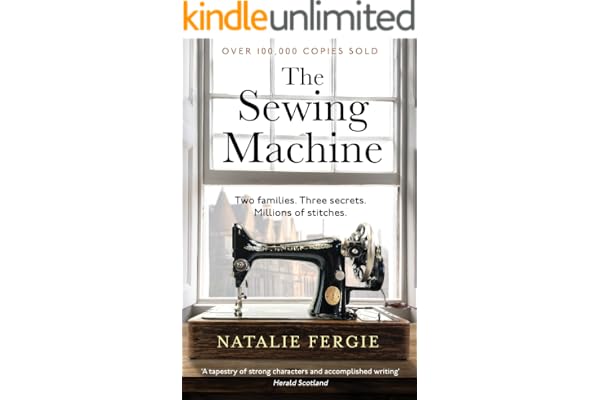
Natalie Fergie's bestselling debut, The Sewing Machine, is a breathtaking family saga that threads together three timelines across a century of Scottish history. Beginning in 1911, young Jean is caught up in the mass strike at the massive Singer sewing machine factory in Clydebank, a moment of defiance that will alter the course of her life. The story then leaps to mid-20th-century Edinburgh, where Connie, a seamstress, carefully embroiders coded fragments of her existence into a notebook, mirroring a tradition passed down from her mother. Finally, in the present day, Fred uncovers a hidden trove of documents that weave these lives together, revealing how a single sewing machine held the dreams, sorrows, and resilience of two families through war, hardship, and quiet acts of rebellion.
With over 120,000 copies sold and a Waterstones Scotland Bestseller accolade, this novel has captivated readers who love multi-generational historical fiction and women’s stories of quiet power. Fergie delicately exposes the tight seams that bind family secrets, the labour of love stitched into every garment, and the unacknowledged courage of working-class women. Each era is vividly drawn, from the clatter and clamour of the factory floor to the hushed intimacy of a sewing room in a changing Edinburgh.
Rich in period detail and emotional weight, The Sewing Machine is a love letter to the art of mending - both fabric and fractured family histories. It resonates with fans of Evie Woods, Sally Page, and Liz Trenow, offering a reading experience that is as warm and comforting as a handmade quilt, yet carries the profound ache of truths too long concealed. This is historical fiction that does not just recount the past but stitches you right into its fabric.