Philosophy
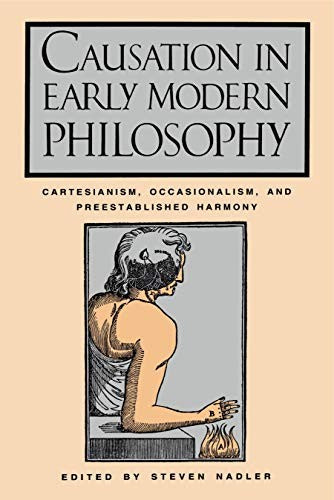
Causation in Early Modern Philosophy
- Order before 3pm and it leaves London today
- Tracked UPS delivery worldwideUsually arrives 6–12 Nov
- 30-day returnsHow returns work
- Format
- Paperback
- Pages
- 232
- Published
- 1993
- Publisher
- Pennsylvania State University Press
About this book
The story
When a billiard ball strikes another, or a decision moves a hand, what is actually doing the causing? Seventeenth-century philosophers gave three rival answers: Cartesian interactionism, occasionalism, which credits God as the only true cause, and Leibniz's preestablished harmony. The essays collected here by Steven Nadler examine each in its philosophical and historical setting, and pay particular attention to how occasionalism and Leibniz's system grew as responses to Descartes's metaphysics and physics.
The cast is broad: Descartes, Gassendi, Malebranche, Arnauld, Leibniz and Bayle, alongside Louis de La Forge and other figures who rarely get a hearing. Read together, the contributions show these thinkers arguing with one another. A rewarding volume for students and scholars of early modern thought who want to understand why causation seemed so troubling after Descartes.
If you like this
You might also like
From the same author, publisher and shelves.